
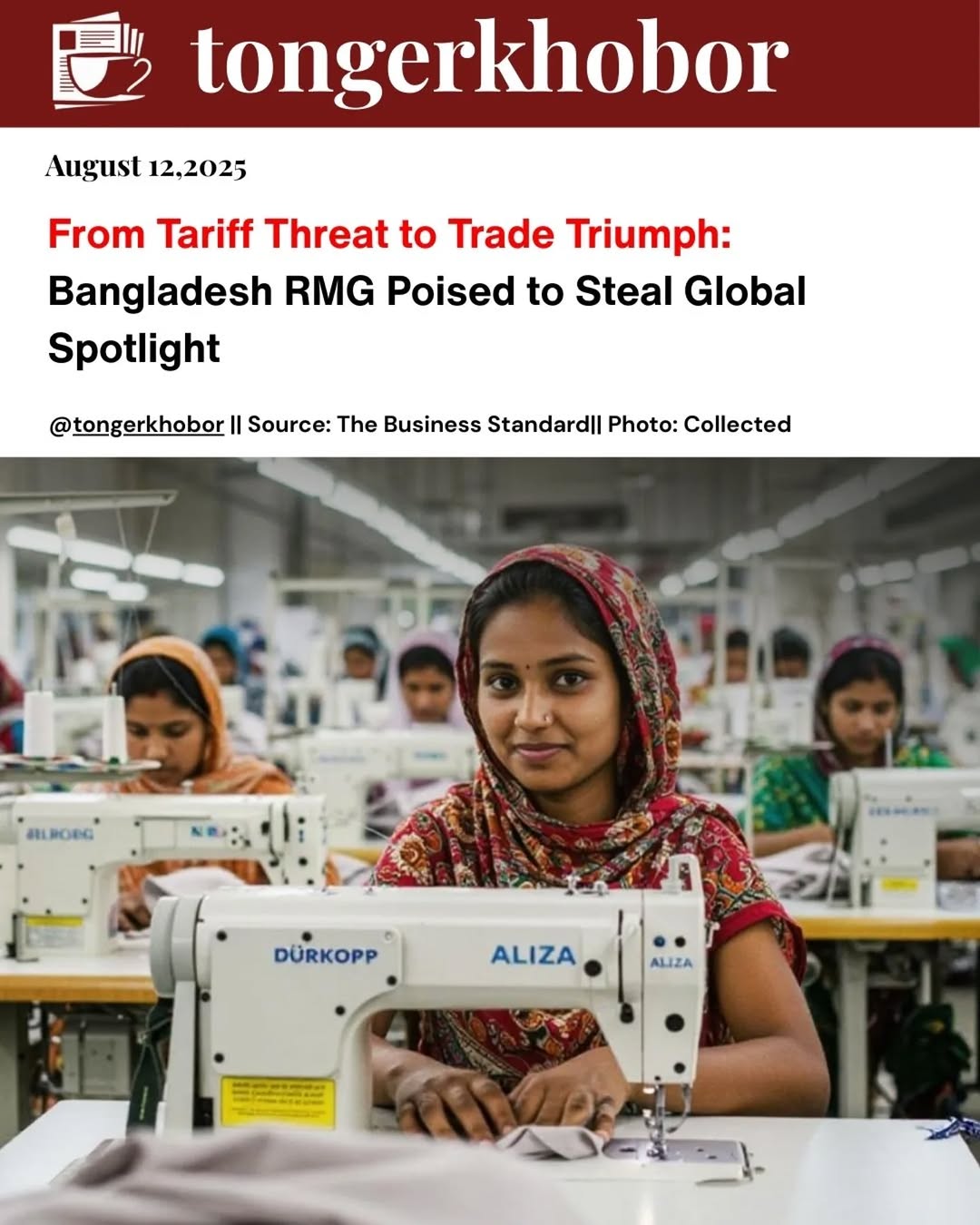
When the US initially proposed a 35% reciprocal tariff on Bangladeshi apparel, exporters braced for severe setbacks. However, a last-minute adjustment lowered the tariff rate to 20% for Bangladesh, while increasing tariffs on India, China, and Myanmar. This shift has rapidly transformed global sourcing patterns.
As a result, US buyers are pouring orders into Bangladeshi factories, prompting local manufacturers to reopen previously shuttered plants, expand production capacity, and invest in new facilities. Even Chinese investors are turning their attention to Bangladesh, renting factories and exploring fresh business models.
With capacity limits tightening in Vietnam and Cambodia, and competitors facing steeper tariffs, Bangladesh’s garment industry is uniquely positioned to seize a major growth opportunity. Nevertheless, rising competition in the European market remains a challenge.
This tariff adjustment could mark one of the most significant turning points in years for Bangladesh’s $75 billion apparel sector, shifting the narrative from threat to opportunity.